
Why psychometrics matters in a digital-first customer experience – empathy in customer service
As customer interactions move increasingly into digital channels, organizations are facing two related shifts.
First, empathy, trust, and kindness are expressed and perceived differently across channels.
Second, customers are reaching out less for information and more for reassurance, clarity, and emotional resolution.
Both shifts are well supported by research. The challenge is not recognizing them. The challenge is turning them into something organizations can design, train, and improve consistently.
This is where psychometrics becomes essential as a true measurement of empathy in customer service.
When “soft skills” meet uncertainty
Empathy, trust, kindness, and reassurance are often described as soft skills or cultural values. In practice, this framing creates problems. When these concepts are loosely defined, they are difficult to teach, evaluate, or scale. They are interpreted differently by leaders, trainers, agents, and AI systems.
This challenge becomes more visible in moments of uncertainty. Research shows that when outcomes feel unclear, customers seek reassurance, confirmation, and closure. In digital environments, where nonverbal cues are reduced, customers rely more heavily on explicit signals to decide whether they feel understood and supported.
Small differences in language, pacing, tone, and structure can significantly change how an interaction is experienced. Without a shared definition of what effective empathy and reassurance look like, organizations struggle to deliver these human qualities consistently.
What psychometrics changes
Psychometrics is the science of measuring psychological and behavioral constructs. Applied to customer experience, it provides a way to move from abstract ideas to operational clarity.
Instead of asking agents to “be more empathetic,” psychometric approaches help organizations:
- Define empathy, trust-building, kindness, and reassurance as distinct, observable constructs
- Identify the specific behaviors that signal these qualities across channels
- Separate perception from intention
- Ensure consistency across evaluators, teams, regions, and technologies
- Link human behaviors to meaningful outcomes such as repeat contact, escalation, adherence, and trust
This matters even more in AI-supported environments, where models need clear, behavior-level definitions to support coaching, evaluation, and improvement.
Supporting humans and AI, not choosing between them
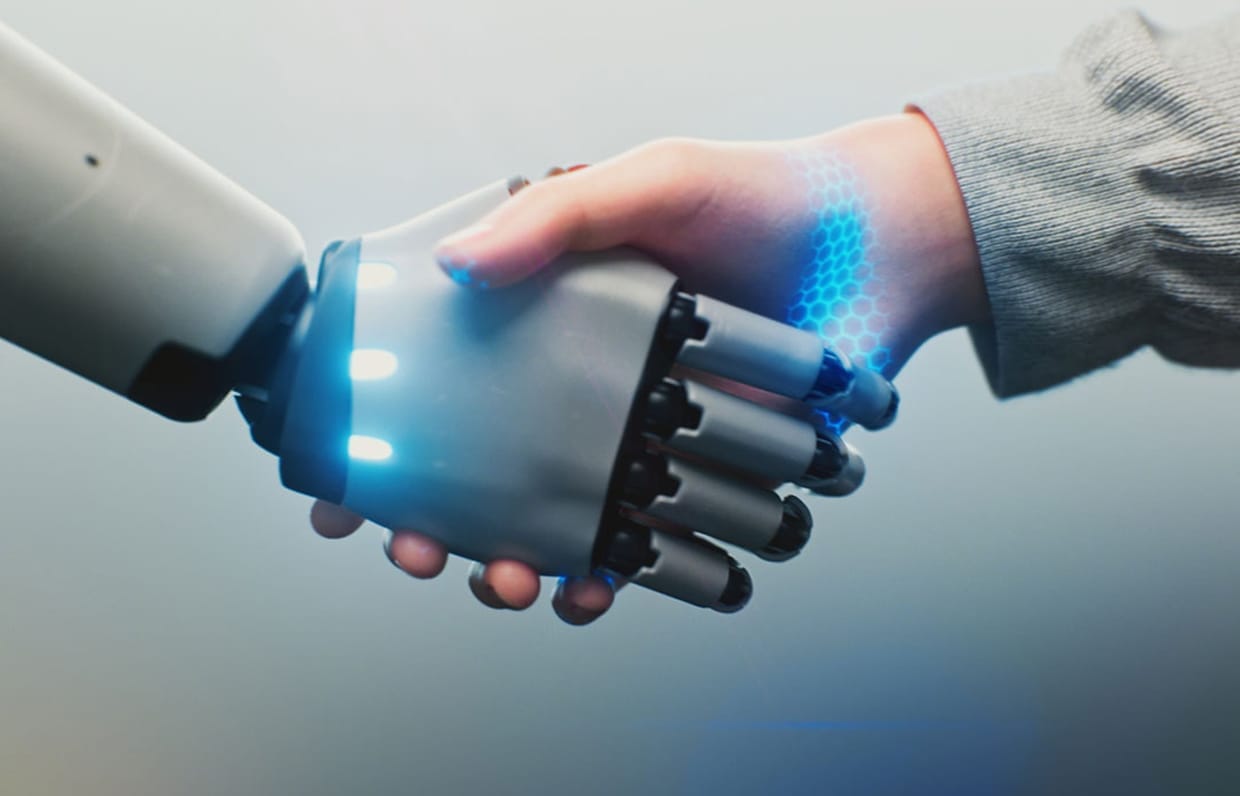
Psychometrics does not compete with AI or digital systems. It enables them. By clarifying what human excellence looks like, organizations can better decide:
- Which interactions should be handled digitally
- When human involvement adds the most value
- How to train and support humans for emotionally complex moments
- How to ensure AI systems reinforce, rather than dilute, trust and reassurance
The goal is not to make experiences more human by intuition alone. It is to make them reliably human, by design.
Why this matters now
As digital efficiency becomes the baseline, the differentiator shifts to how organizations handle uncertainty, emotion, and trust repair. Empathy and kindness are no longer optional values. They are operational capabilities with measurable impact.
Psychometrics provides the bridge between human experience and scalable systems. It allows organizations to treat empathy, trust, and reassurance not as vague ideals, but as capabilities that can be defined, measured, and developed over time.